

On a recent visit to Hamiltonhill Claypits Local Nature Reserve, I noticed a rather unusual-looking fly resting among the vegetation. At first glance, there wasn’t anything particularly remarkable about it – I initially wondered whether it might be a hoverfly or one of the more familiar muscid flies, but the combination of markings and its overall shape didn’t quite fit.
It was only when I looked more closely that I realised I might have found something rather interesting. With those banded eyes and protruding lower face, I suspected that it was a Locust Blowfly, Stomorhina lunata. I managed a couple of photographs, which I uploaded to iRecord.
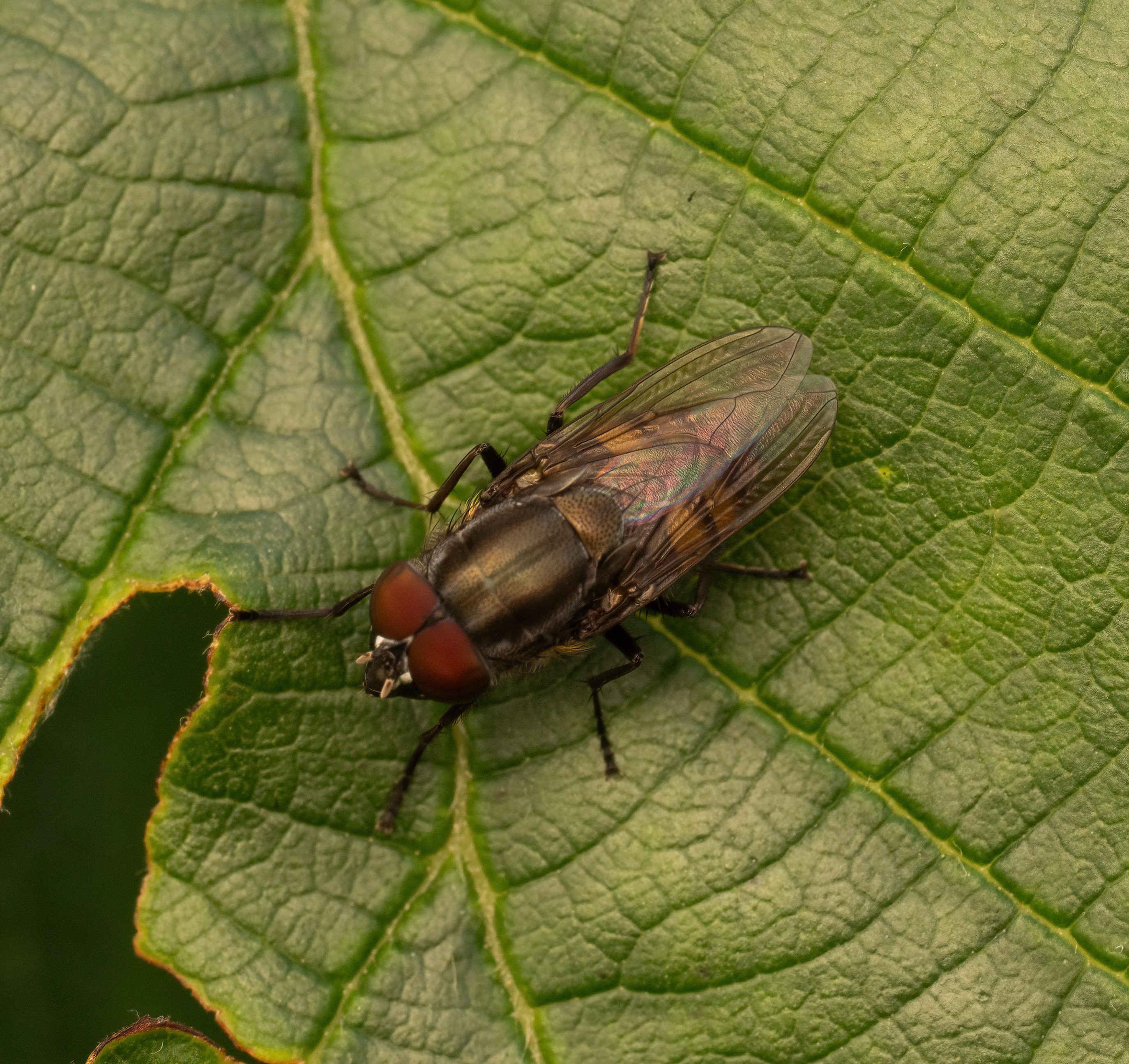
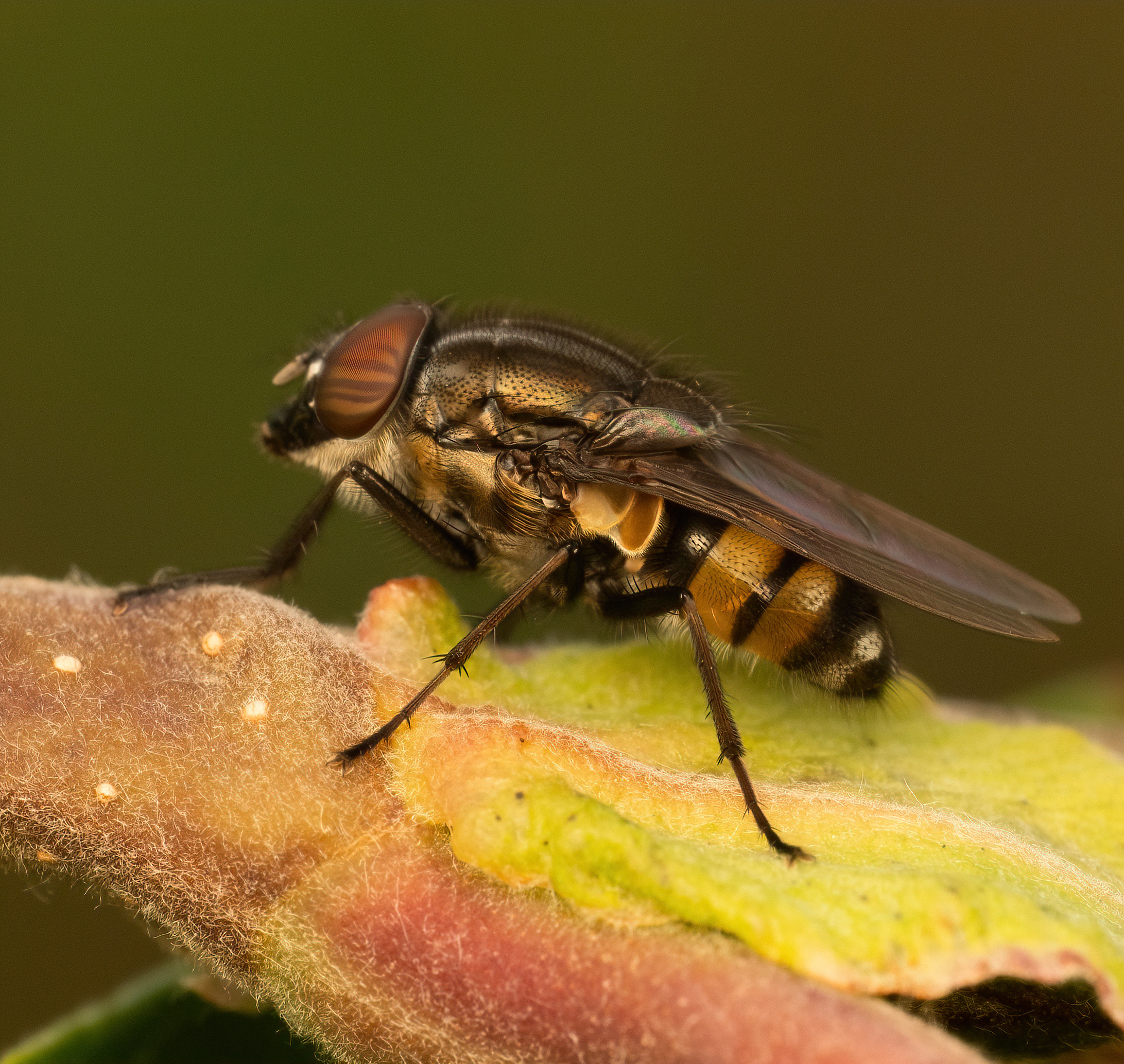
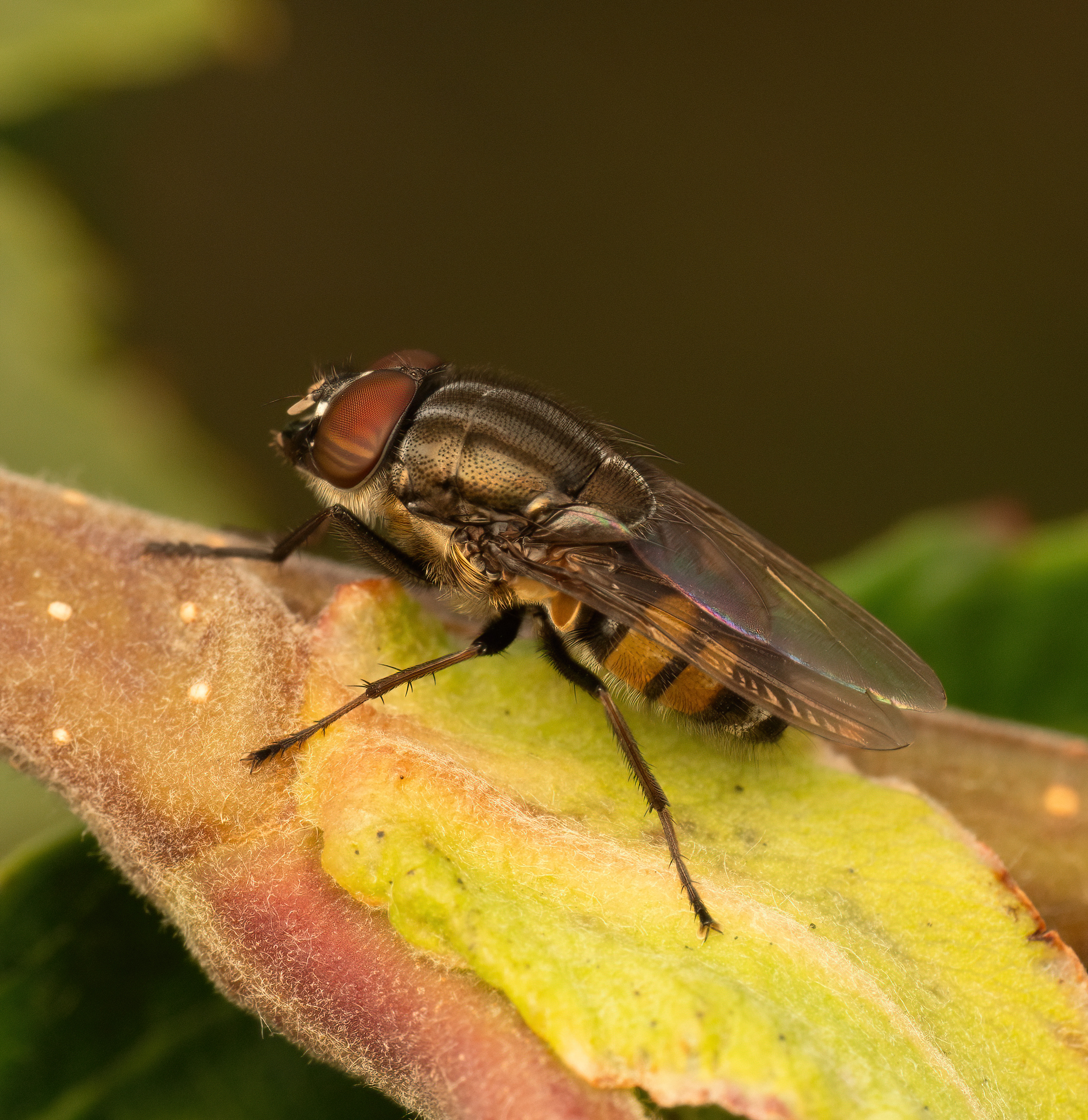
The identification was subsequently checked, confirming that this was indeed Stomorhina lunata. Although it has become more frequently recorded in Britain in recent years, it remains an unusual species here. The species is listed as an occasional vagrant, with the first Scottish records from Sutherland in 2015 and 2017, hundreds of kilometres north of the species’ previously known British range. This is the first record for this species in the Glasgow region.
There is also something fascinating about its biology. The larvae of Stomorhina lunata are associated with locust egg pods, but are now thought to use grasshopper egg pods in Britain, although it remains unclear whether the species forms permanent populations here. Adults, meanwhile, visit flowers, feeding on nectar and pollen. A paper discussing Scottish records of Stomorhina lunata provides some useful background on the species’ history in Scotland.
Hamiltonhill Claypits Local Nature Reserve is a remarkable example of urban wilding, with flower-rich grassland, woodland, scrub, reedbeds and ponds all packed into a relatively small area. Despite being Glasgow’s smallest Local Nature Reserve, it has produced an impressive variety of wildlife records, including numerous invertebrates added to the species list in recent years.
This is exactly why continued recording at sites such as the Claypits is so valuable. Species can be overlooked simply because nobody happens to be looking for them – and flies in particular are an easy group to walk past without a second glance.
For me, that’s one of the most enjoyable things about exploring the Claypits. You never quite know what you’re going to find.
One minute you’re walking through an old industrial landscape in the middle of Glasgow; the next, you’re photographing a fly that turns out to be a rather unusual Scottish record.

