
As part of my ongoing travels around Glasgow’s green spaces, last weekend I headed southwest to Linn Park. I took the slightly longer, more scenic route, following the White Cart Water through a strip of deciduous woodland.
Whilst wandering along the shaded footpath, I noticed several small invertebrates on the wooden railings. They were little (around 3 mm long), dark, and surprisingly shiny. It wasn’t until I looked through my camera that I realised they were globular springtails – but not a species I recognised. I was also struck by how docile they were. Whenever I’ve tried to photograph springtails before, they’ve usually disappeared in a split second, but these seemed quite content to let me take a few photos without making much effort to escape.

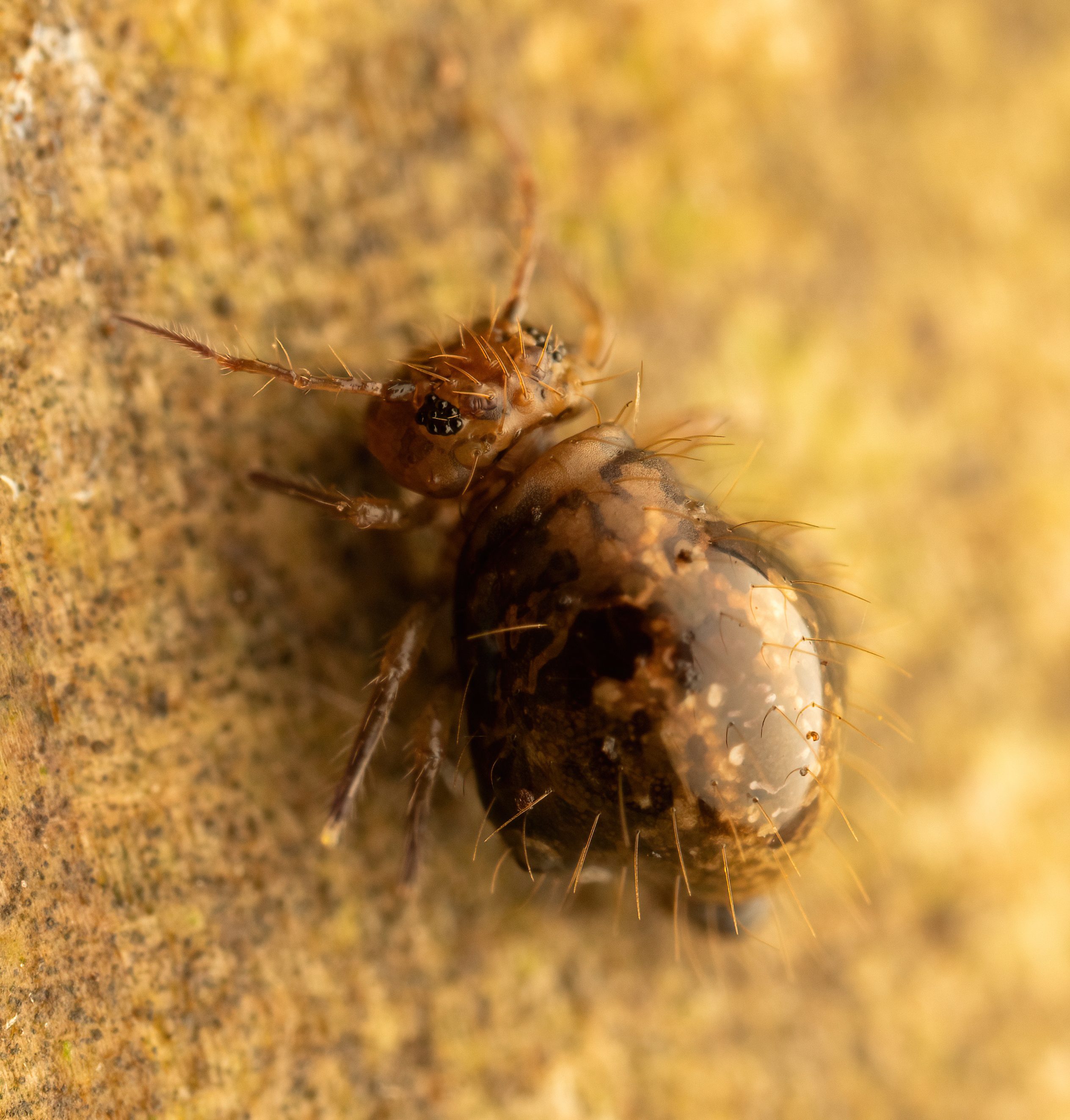
After doing some online investigation that evening, I concluded that they were likely Allacma fusca. Described as large (for a globular springtail), dark brown, and with a 4th antennal segment which is divided into 16 subsegments. That did seem to check out, but as I hadn’t previously encountered this species, I remained unsure. I added my tentative ID to iRecord and the following morning checked the Glasgow Museums Biological Records Centre’s database. To my surprise, there were no records of this species in the GMBRC recording area, and when I checked NBN Atlas Scotland, I only found a limited number of records for the whole country.
More determined now to discover who these lovely little creatures were, I emailed James McCulloch, scheme organiser for the Springtail Recording Scheme. I got a prompt reply confirming that these were indeed Allacma fusca, and a suggestion that this species may actually be more abundant in deciduous woods in the Scottish lowlands than is currently known.
So it would be worthwhile, whenever you find yourself in this kind of habitat (especially in damper areas), to take a look and see if you can find this springtail. There’s a very good chance that it could be the first record for the site, or even the county.


