
Last week (22 – 28 June 2026), both the Royal Entomological Society‘s annual Insect Week and the GB Non-native Species Secretariat (NNSS) & Defra’s Invasive Species Week happened to coincide. As such, there was a series of excellent events and activities across Britain which aimed to celebrate insects and raise awareness about the impacts of invasive species. Rather than focusing solely on invasive species, the overlap between the two events got me thinking more broadly about how warming temperatures are changing the composition of Britain’s invertebrate fauna.
I was in London for most of the week (which also coincided with a mini heatwave), taking care of other commitments that unfortunately kept me out of the field – but perhaps that was for the best. With three consecutive days each setting a new June temperature record, the Met Office issued Red Extreme Heat Warnings across parts of England and Wales, warning that ‘hot spells will become more frequent in our future climate’.
You may ask yourself why I am going on about the heat? Well, insects are ectothermic (‘cold-blooded’) so tend to become more active in warmer temperatures, which is why we generally see higher insect activity – and for many groups greater abundance – during summer in temperate zones. However, thresholds of heat tolerance vary across insect groups and species. Bumblebee colonies, for example, are negatively affected by exposure to heat stress through effects on fertility, brood survival rates, and morphology, which then affect forage success rates in workers. But in other species, increased temperatures can be considered a boon. Insects and other invertebrates that can tolerate (or thrive in) extended periods of exposure to high temperatures could become established in areas where they were previously unable to live, such as mosquitoes being recorded in Iceland for the first time in 2025.
These northward (and sometimes altitudinal) expansions or range shifts can be seen across many invertebrate groups. Even Glasgow is seeing new species arrive, either as native species shift their ranges northwards or as non-native species find conditions suitable for establishment.
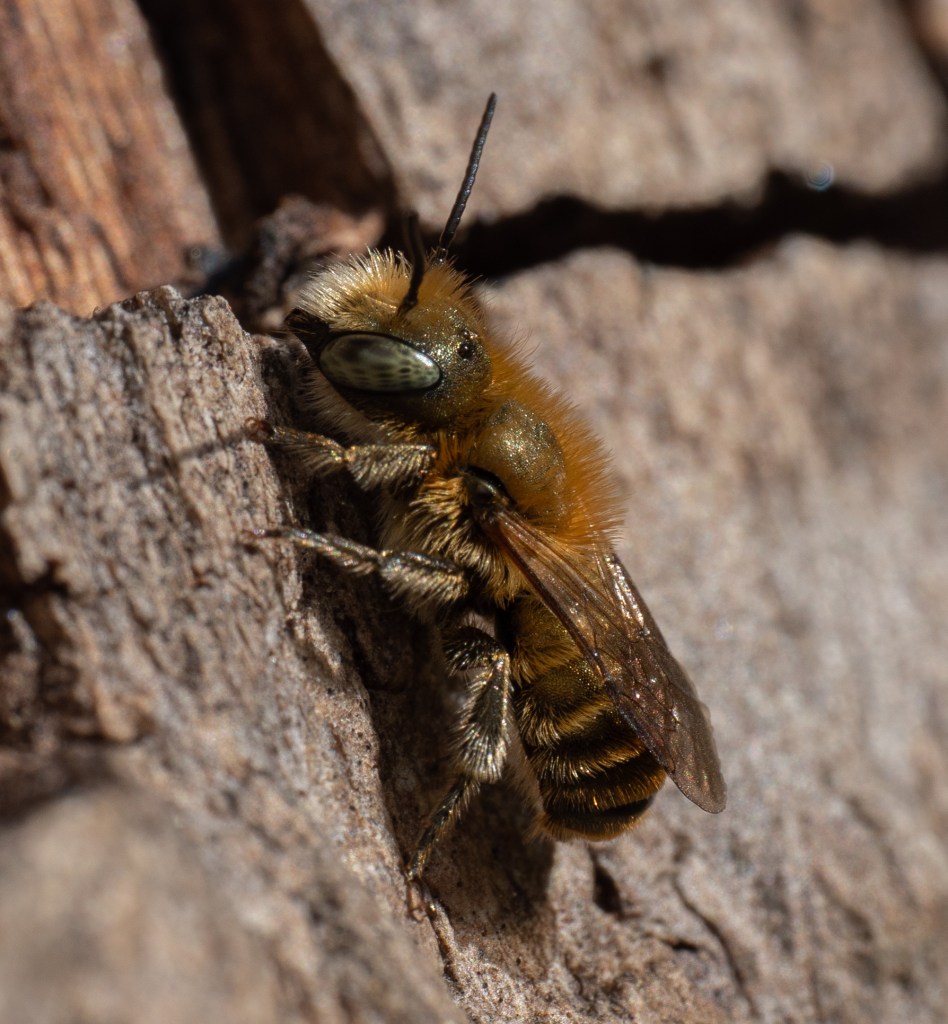
The Blue Mason Bee (Osmia caerulescens) is one such recent arrival. More commonly found in southern England, there have been sightings of this species in Scotland, including records from Glasgow.
When I first arrived in Glasgow a few months ago, I spent a good deal of time in the Arboretum attached to the Botanic Garden. And as the weather was largely unfavourable for most insects, I found myself flipping stones and bits of dead wood to see what might be living underneath. On one such outing, I discovered three species of non-native flatworm: Kontikia andersoni, the New Zealand Flatworm (Arthurdendyus triangulatus), and the Yellow-striped Flatworm (Caenoplana variegata). All of these species originate from Australasia and have most likely been introduced to the UK through the horticultural trade. The New Zealand flatworm was first recorded in the UK at Edinburgh Botanic Garden in 1950 and is now fairly widespread across Scotland. The other two species are more recent Scottish arrivals; the Yellow-striped flatworm was first found in the UK in 2008 and was initially confined to the south coast of England. Kontikia andersoni was only known from Cornwall and the Isles of Scilly, the Isle of Man, Northern Ireland and the Irish Republic before being recorded in Scotland in 2014. Though these aren’t insects, they illustrate how invertebrate communities can change relative to global trade and changing climatic conditions.
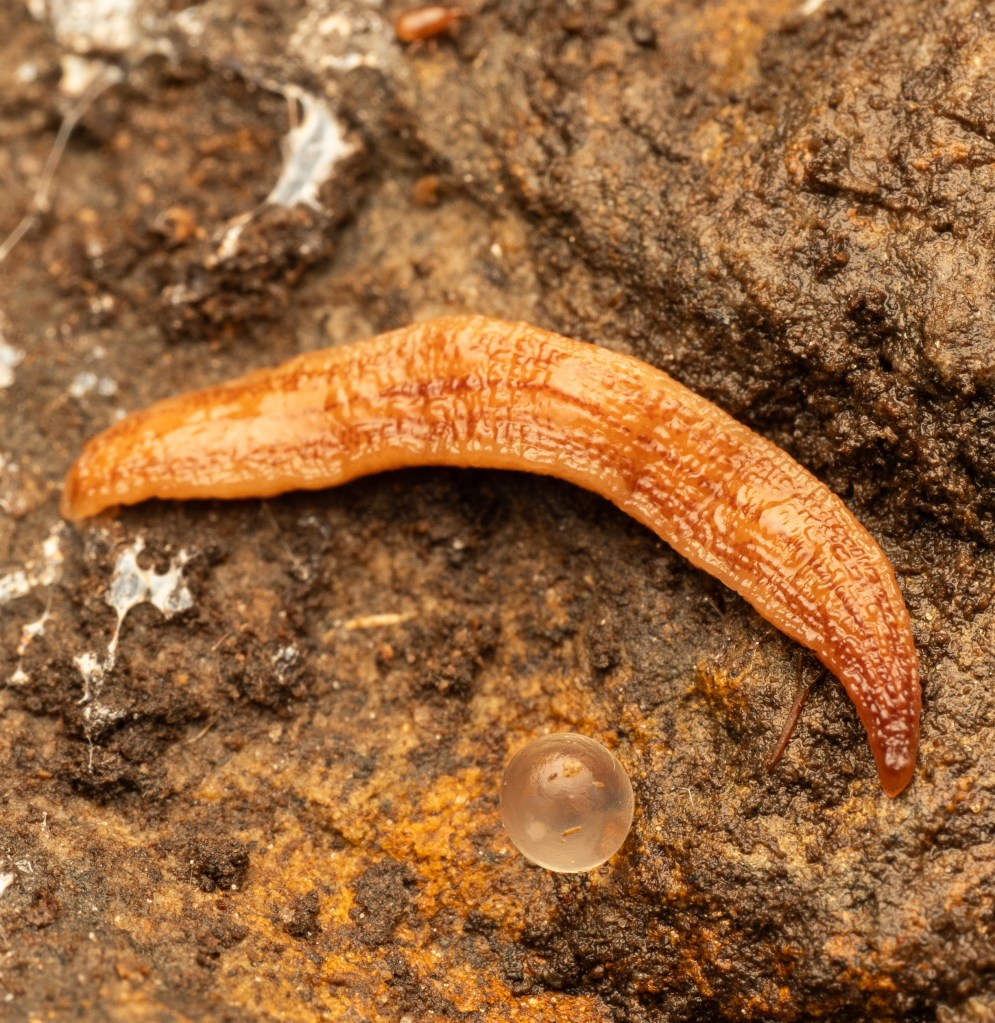

(Arthurdendyus triangulatus)

(Caenoplana variegata)
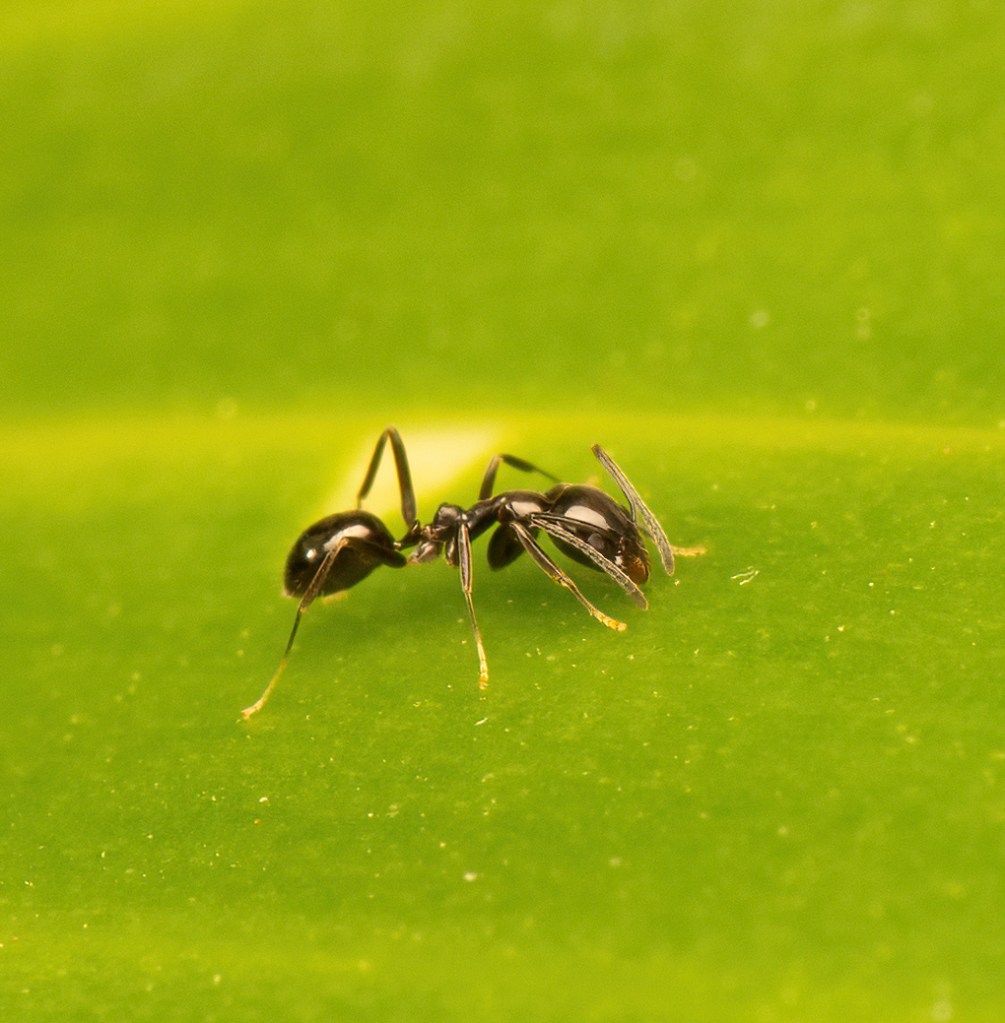
Not far from the Arboretum, I also visited the Botanic Garden glasshouses, where I found two species of non-native ants happily living amongst the tropical vegetation. Linepithema iniquum is an arboreal species native to Central and South America, whilst the Little Yellow Ant (Plagiolepis alluaudi), native to East Africa, has, as recently as 2023, been found living outdoors in continental Europe for the first time. Invasive ants are considered a severe threat to biodiversity, with a recent paper reporting that, on average, 50% fewer individual animals and species are found in ant-invaded areas. As yet, these ants aren’t found outside the glasshouses, presumably because Scottish climatic conditions aren’t currently suitable to support such a move.

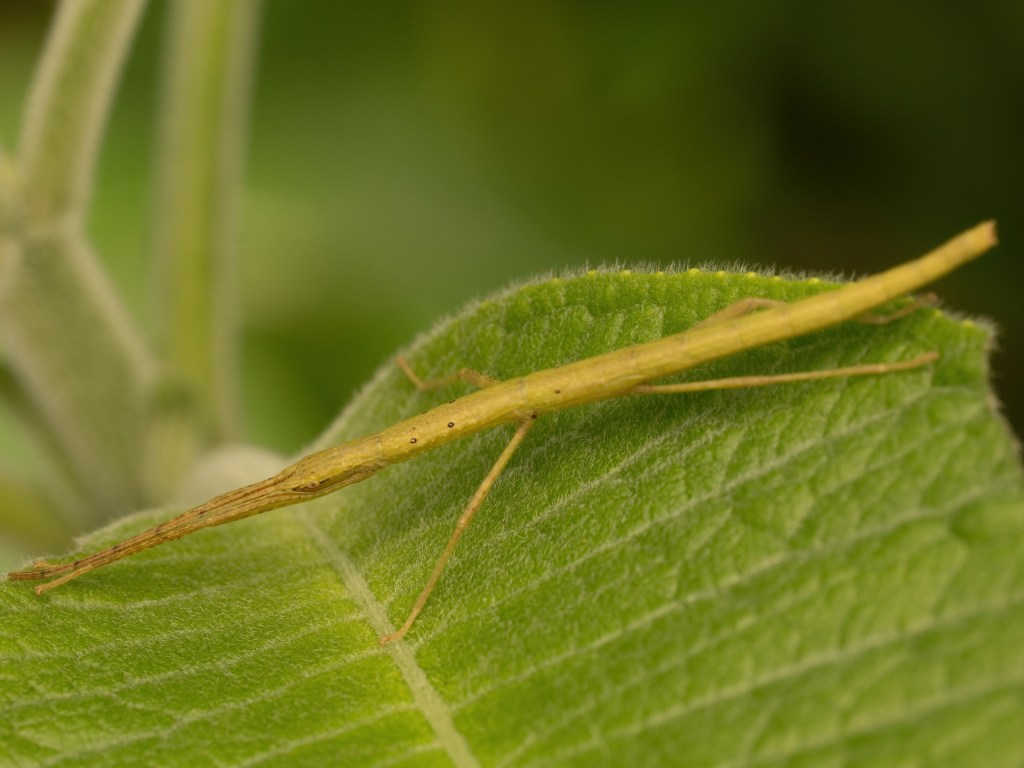
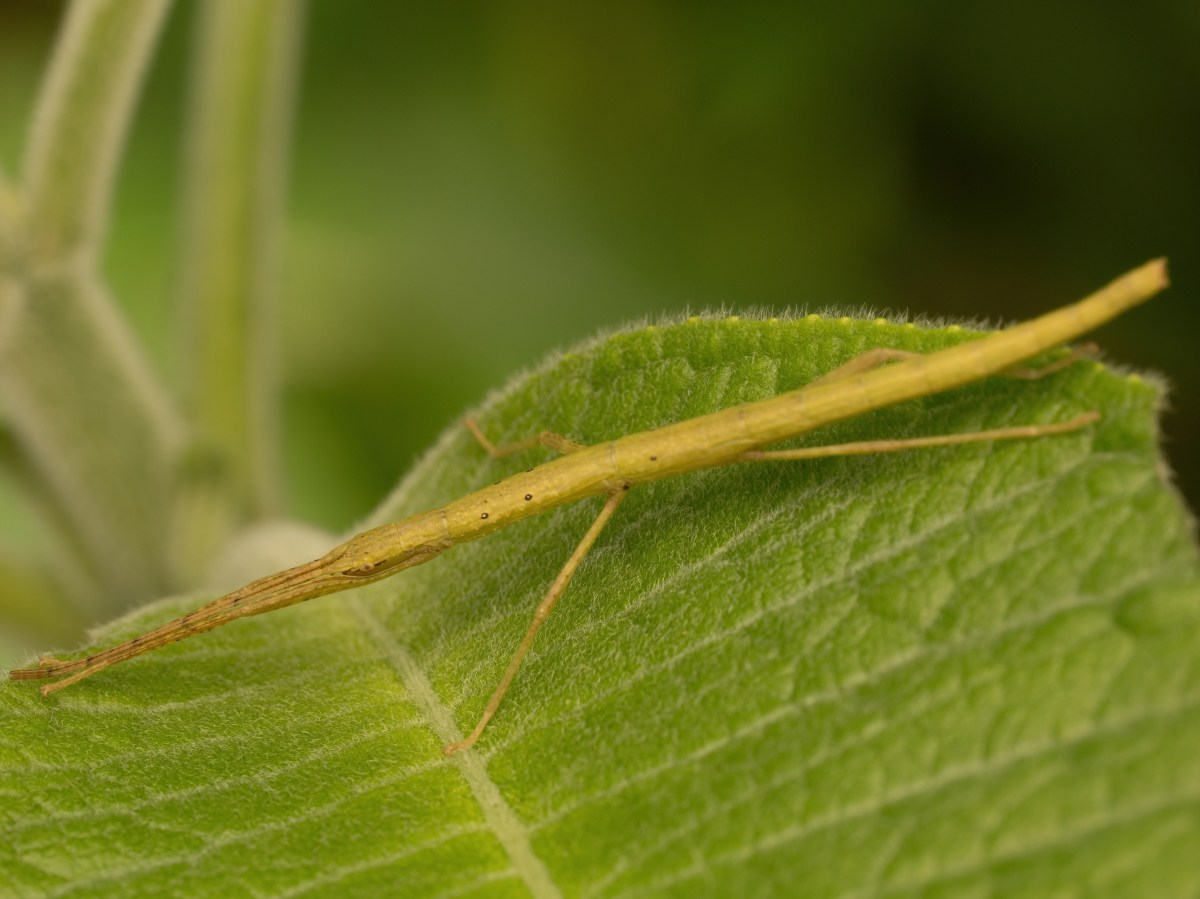
The Kibble Palace glasshouse at the Botanic Garden is also home to a population of Indian Stick Insects (Carausius morosus), which are said to be the descendants of unwanted pets that were released into a ‘good home’ about 20 years ago. Like the ants, they are non-native but are not currently considered invasive in the UK because they have not established outdoor populations. However, it is conceivable that this could happen as the climate warms.
The outlook for invertebrates in a warming climate is a mixed bag with both ‘winners’ and ‘losers’. Some species will likely disappear from areas, and new species will arrive. But this is a complex issue, with multiple additional factors coming to bear on species distributions such as habitat availability, genetic diversity, and species interactions, to name but a few. We can’t be absolutely sure what the impacts of these changes will be, but the scale and pace of them are unprecedented and therefore of concern. Will Indian Stick Insects and other so-called ‘hothouse aliens’ become the new invertebrate fauna of Glasgow as native species experience changing environmental conditions and interact with an increasing number of non-native species? Probably not entirely, but they may one day form part of a significantly altered invertebrate fauna for the city. Many of these newcomers will never become invasive or cause measurable ecological harm, but they nevertheless illustrate how rapidly invertebrate communities are changing in response to climate and human activity.

